

What’s Up With The New Dietary Guidelines for Americans?
Blog written By: Alyssa Leib with Peak to Peak Nutrition
If you’re among the 10% who pay attention to the Dietary Guidelines for Americans, you have probably seen the new update that has been causing a stir. If you’re wondering what the big deal is, this is great news for you - Juliana asked me to break down the good, the bad, the ugly… and what to do about it, so keep reading!
The good
The new guidelines aren’t all bad! They emphasize eating a diet rich in whole foods, including lots of fruits and veggies. They also updated the protein recommendation (1.2-1.6 grams of protein per kilogram of body weight) to more closely meet the needs of athletes (although the general population probably doesn’t need quite this much).
The bad
I need a list for this one:
Inconsistencies abound! The Guidelines encourage you to make red meat, beef tallow, and cheese the cornerstone of your diet… while still recommending that you limit saturated fat intake to <10% of your calories (on a 2000 calorie diet, you would hit that limit with 2 eggs cooked in butter… the math just ain’t mathin’).
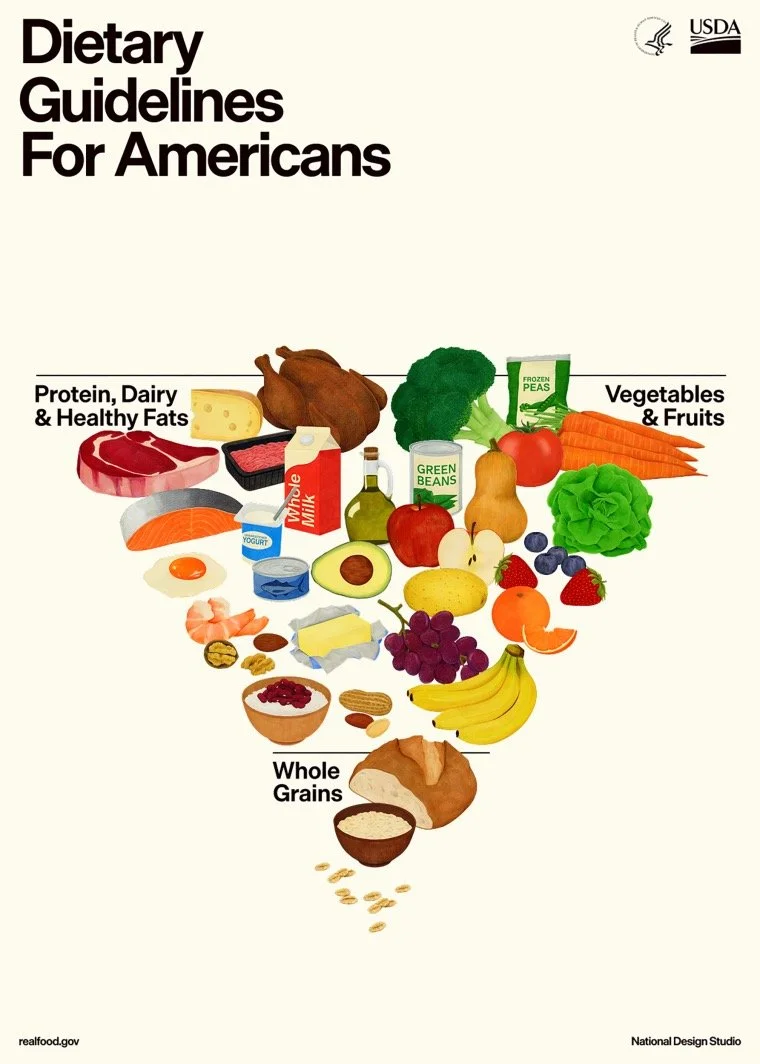
The actual guidelines encourage us to eat 2-3 servings of whole grains per day (pssst - this is not enough for active people!), but the location of grains on their new “inverted pyramid” graphic suggests that we should be avoiding them.
While previous versions of the Dietary Guidelines recommended limiting alcohol to 1 or 2 drinks per day (for women and men, respectively), the new advice is essentially to “drink less”. The Administrator for the Centers for Medicare and Medicaid Services, Dr. Oz (yes, that Dr. Oz) even came out and said that alcohol is a “social lubricant” and that “there is probably nothing healthier than having a good time with friends.” The decision to drink is super personal, but there is no amount of alcohol that is safe, so this new guidance is irresponsible.
The ugly
My biggest complaint with all of this: there is no mention of social determinants of health: things like education, income, access to healthcare, and time that are all shown to be more important for your overall wellbeing than lifestyle decisions. I’m all for eating more vegetables but the current version of the Dietary Guidelines does nothing to address how the folks in our country who would most benefit from improved nutrition can actually access it.
Also, the “inverted pyramid” is actually ugly - and it’s also super confusing.
What you should do
Honestly, if you care about nutrition, the best thing you can do is ignore the new Dietary Guidelines for Americans altogether. Here are some resources to try instead:
The US Olympic & Paralympic Committee has a ton of great resources for athletes. I recommend the Athlete’s Plates as a practical tool for building balanced meals.
The Canadian Food Guide is very similar to our Dietary Guidelines Formerly Known as MyPlate. They have a ton of resources on nutrition for the general population.
If you’re really not sure, the best way to get individualized support is to work with a Registered Dietitian (like me!).